








A Proven Product Design Process: Real-World Example Explained
Getting a product from early concept to mass production is rarely straightforward – it’s often messy, full of trade-offs, and faces real-world limitations. A strong, user-centered product design process can dramatically reduce risk and turn good ideas into successful products. This article uses a bathroom grab bar, one of the simplest examples in the real world, to showcase how a good product design process can help with product development.

A simple overview of the product design process consisting of three important parts:
- Foundation: in-depth research, followed by concept generation and 3D CAD.
- Validate: turn designs into proof-of-concept prototypes, uncover what works, and what doesn’t work through testing and iteration.
- Go-to-market: optimize design for manufacturing, vendor sourcing, and planning logistics for market entry.
PART 1 | Foundation: Create a product that resonates
Step 1: Identify your areas of influence
The first step is to build a solid foundation to create truly meaningful products by asking lots of questions across different areas of influence:
- User: For the end user of the bathroom grab bar, some questions might be: does it do the task? How much does it cost? Will it look nice in my bathroom? Is it easy to install?
- Environment: In this case, resistance to moisture and cleaners are big considerations; the mounting substrate is also another key consideration.
- Distributor: Grab bars are often sold to consumers through a retailer such as Home Depot or Amazon. There will be individuals that determine if they want to carry your specific item in their lineup. Questions they might ask: How does the price point compare to others that are already on the market? What shelf space does it need? What is the profit margin?
- Regulatory: for products in the medical realm, you’ll need to figure out: Is the product compliant? How does it adhere to existing standards?
Once you have gathered all your notes, the next step is to begin organizing and documenting your thoughts.
Step 2: Document the requirements
There are several methods of doing this, including tools like Product Requirements Documents (PRD) or Traceability Matrix. The main goal is to create a clear communication channel for all the people that might be involved throughout the product development process, including designers, engineers, clients, and vendors.
Using the bathroom grab bars example, , we can group requirements into themes and identify the key criteria, adding quantifiable metrics where possible:
| Ergonomic | Functional | Aesthetic |
|---|---|---|
| grip diameter of 1.25-2.0in | withstand exposure to moisture and cleaners for 10 years | fit within different bathroom aesthetics |
| withstand minimum load of 250lbs | explore ways to reduce barriers to mounting: wall damage and specialized tools | avoid stereotypical “silver tube” form factor – the U-shaped silver bars feel too medical and often don’t fit into people’s home interiors
|
| should not rotate in fittings and/or include grip/texture | avoiding insecure mounting methods: suction cups, adhesives, clamps |
Step 3: Design research
After identifying the two main themes (mounting and aesthetics), we’ll be exploring opportunities or limitations for how to address these two themes.
There are many methods for design research that can be used to identify design requirements. Which one works best for your invention would be determined by your product type, what market you are targeting, and realistically, the amount of time you have to conduct research. Below are just some examples of research methods available, but there are many out there:
- Journey mapping
- Direct user feedback
- Competitive market analysis
- Expert interviews
- Aggregate surveys
- Field studies
- Standards review
In the grab bar case, our research is high level and based on reviewing construction standards, reading online user reviews, and speaking with professionals and experts.
At the end of your research and requirements gathering, you should have a good idea of what your product should do, and from here we move into the concept generation phase.
Step 4: Concept generation
The initial ideation relies on divergent thinking: generating as many concepts as possible without much filtering, using paper or digital sketching, and mind mapping.
For something like a grab bar, that might mean exploring different forms, profiles, mounting styles, even ones that might not work. It’s just a way of keeping our minds open.

sketches with divergent thinking
Later stage ideation, however, relies on convergent thinking: applying constraints of functionality, usability, materials, and manufacturability. The purpose is to narrow in on the most promising direction(s).

narrow down by convergent thinking
In this case, we determine hardware style for the mounting points and consider the manufacturing process we might use. This is where we think about what is realistic, safe, and user-friendly.
Will users immediately understand how to use it? Does it look good? Does it feel like it belongs in their space? Putting yourself in their shoes is the most important thing you can do; it’s the key to making the right design choices throughout the entire development path.
Step 5: Concept development: CAD
Once we’ve refined our sketch, it’s time to bring it into CAD. This is where the sketch becomes something with real dimensions and real constraints. We start to visualize how things fit, how they move, and even how strong these parts might be. The 3D model also gives us a better sense of overall proportions.

CAD model of bathroom grab bar
This model allows us to create photorealistic renderings and animations that are great for presentations and attract potential investors. The CAD phase is really the last step before making a physical part.

rendering of the CAD model
Steps to Bring Requirements and Solutions Into Alignment
For this use case, we chose aluminum for its lightweight strength and long-lasting durability. It also gives us flexibility with finishes and colors. We went with a profile that has a smooth outer face but with a hidden grip along the back for a clean and minimal appearance. The linear shape is different from the clinical “u-shape” bars and can better blend into surrounding fixtures.

For mounting, we are advised by experts to steer clear of any double-sided adhesive or suction cup mounts and choose a more reliable screw mount. We reduced the design to two screws and set them on a rotating plate to help with better positioning. This will ideally reduce the risk of having the screws align in such a way that it can potentially crack the tile.
From a functional standpoint, we used anodized aluminum which is highly resistant to moisture and cleaners. The bars follow the diameter and measurement guidelines recommended in best practices.
PART 2 | Validate: Failing fast and learning fast
The validation process is not linear and often involves multiple rounds of prototyping, testing, and refinement. There are three main stages that we follow for prototyping:
- Mock-up (low-fidelity) prototyping
- Functional (mid-fidelity) prototyping
- Refined (high-fidelity) prototyping
Step 1: Mock-up prototyping
The purpose of a mockup prototype is to quickly and inexpensively explore ideas and validate concepts before committing to a final design.
Mock-ups allow us to identify flaws and gain feedback early in the process, emphasizing function, form, and ease of use.

For early-stage mock-ups we typically use 3D printing. It’s affordable, and ideal for getting physical models into our hands fast. Check out this blog to learn how to choose the right 3D printing technology for prototyping.
Step 2: Functional prototyping
We can apply feedback from the mock-up prototype and start refining details and mechanical functionality.
Taking the grab bar as an example, we can leverage higher precision techniques such as SLA or SLS 3D printing to better explore features such as the grip, the texture, as well as how the parts can assemble. We can also lean on CNC machining to produce high tolerance parts using the same materials that we intend to use for production.

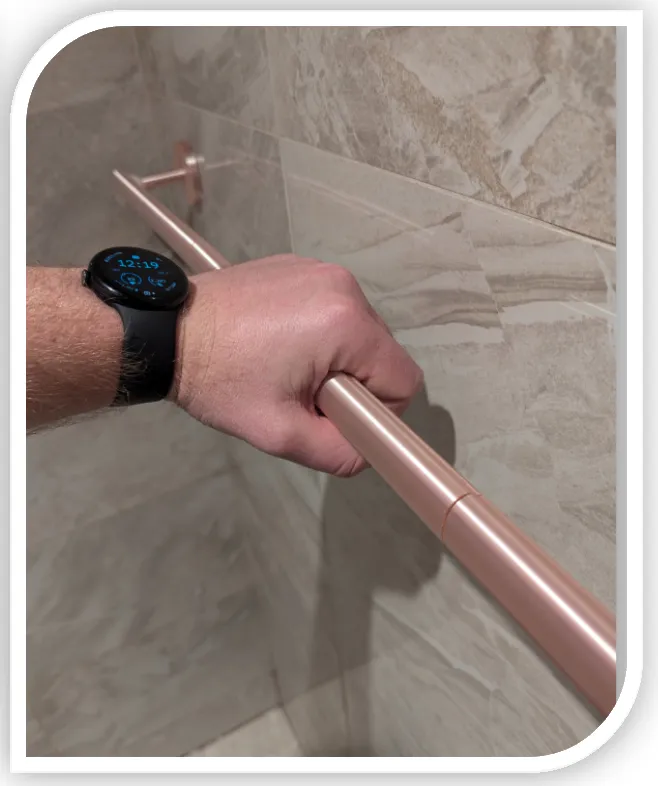
Step 3: Refined prototyping
This near-final model ensures aspects such as comfort, design, and performance are validated before making that final leap into production. They are built with the materials that we plan to use in manufacturing so they will look, feel, and perform like the real thing.
Fabricating this level of prototype would involve CNC parts and, in some cases, rapid tooling for more complex components.
This phase does involve a higher price point, but the realism it provides ensures smarter decisions before production. The design shown here is a prime example of a client who trusted this process. We went through multiple validation cycles to end up with a very high end, premium prototype.

from functional prototype to production model from the blazing beard tool
PART 3 | Go-to-Market: The final leap from design to reality
By this stage we have hopefully validated our invention, filed the right patent, and are ready to bring this product to market.
Manufacturer sourcing
The first step before going into production is finding a vendor to make your product. Generally, there are two ways to find vendors: independently through web searches, or through sourcing partners. In our experience, a sourcing partner is by far your best chance at landing with a reputable vendor, especially if producing abroad. Check out how to find a manufacturer for more details.
Design for manufacturing
In our design of the grab bar, we’ve applied DFM principles and best practices to bridge the gap between concept and production. This is something we always consider early during the conceptual phase to make sure there’s no surprises when we reach manufacturing.

Using our grab bar as an example, we use existing manufacturing processes along with symmetrical parts and off-the-shelf hardware.

DFM for the End Cap
By making the end cap fit both ends of the bar, we have simplified the assembly and reduced the number of molds required.
Once we choose the best manufacturing method, we’ll go back into CAD, and we’ll start optimizing the design to make it suitable for our manufacturing process. In our case, the end cap would be modified to meet die casting requirements.
Adding draft and reducing thickness will ensure the part can be molded efficiently while reducing weight and improving part quality.

DFM for Grab bar
Extrusion dies are the go-to process for manufacturing long, uniform shapes. Compared to other processes like machining, injection molding or die casting, extrusion dies are simpler and cheaper to produce with less waste.
Like the end cap, we can engineer the bar to perform with reduced weight and minimized wall thickness.
Production Cost
Using our bathroom grab bars as an example, let’s run through an example of what a quote from a vendor might include and other areas you need to consider.
These numbers are purely for illustration and do not reflect actual costs.

- Unit cost: the cumulative cost of the individual parts and materials that are required by the factory to make one copy of the product.
- Logistics cost: this includes shipping, warehousing, etc.
- Molds and tooling cost: these are the machines created to make the parts. In our case, the grab bar extrusion will need an extrusion die created. In the example of many plastic products on the market, an injection mold would need to be created. This is an upfront cost and the way it is amortized is up to your specific business plan. You can amortize it over the first order or over the total life of the tool.
For most consumer-type goods, you want your Retail Cost to be about three to four times the Unit Cost to account for all the other variables and create good margin. However, this too can vary by product category and can be a lot higher for medical products.
Conclusion
The amount of design considerations for a basic product like the bathroom grab bar is huge. TriMech Design integrates all the creative thought, engineering smarts, and due diligence into every project. Talk to our experts for your product design now.
FAQ
How do you balance cost and quality in product design?
Material and component selection is guided by the required lifespan of a product and the retail cost the target customer is willing to pay.
Good design doesn’t have to be expensive. It just has to be thoughtful. The goal isn’t to overspend, but to invest in what truly matters, like durability and usability, so that we get the best value without adding anything unnecessary.
By following a Minimum Viable Product (MVP) approach, we prioritize the simplest version of a product that effectively solves the core problem. This helps prevent overbuilding, reduces development time and costs, avoids feature creep, and results in a cleaner, more focused product that delivers the best value.
Have a Product Idea?
Discover our product development services tailored to startups, small manufacturers, and inventors.
Design Newsletter
Get the latest news curated for designers, makers and inventors.
Product Design Experts related to this content:
Discover our team of designers, engineers, project managers, and problem-solvers.

Lena Sitnikova, Senior Project Manager
Lena Sitnikova is a Senior Project Manager (CAPM®) with a background in industrial design and soft goods development.
More from our Blog
Creating An Investor Pitch Deck
Before you read any further about this article on investor pitch deck help for investors, do you have a business model? If not, it’s a…
Avoid the Top 4 Common Patent Application Mistakes
The patent application process isn't straightforward and plenty of inventors have made mistakes that cost them their patents!
How TriMech Design Solutions Uses Intellectual Property Protection for Clients
Before starting your product design process, it’s important to understand what Intellectual Property Protection is and why it is important.
Need help with your Product Idea?
Tell us about your invention or product design idea and get the help you need design, build and bring it to market