





Top Product Development Principles for Startups vs Enterprises
The path from concept to something a customer can actually buy involves more decisions and trade-offs than most teams anticipate. What often goes unacknowledged is that the process of getting there looks fundamentally different depending on whether you’re a startup or an enterprise.
Product development principles drive the scale, mindset, structure, and risk tolerance at each stage of product design. Understanding where startup and enterprise product development truly differ is a practical starting point for building a company and a product that can scale over time.
Startups vs Enterprises for Product Development Processes
The differences between startups and enterprises may just appear to be the size of the organization or management structure. These differences in development principles are especially pronounced where priorities, constraints, and operating models shape distinct approaches across every stage of development.
Budget and Funding Structure
How teams plan budgets and structure funding has a direct impact on how they make decisions, manage risk, and move work forward.
Startups
Budgets are usually tied to milestones rather than long‑term plans. Spending decisions are closely monitored and can depend on fundraising cycles, early revenue, or external validation.
When planning a budget within a startup, keep the bigger picture in mind and leave some reserves for those
Enterprises
Typically work with allocated budgets that are approved well in advance. While funding may be more stable, it comes with governance requirements and internal checkpoints.
Within a more structured environment, the most important aspect is clear and frequent communication to keep everyone aligned and avoid conflicts arising due to missed information.
Speed and Timeline Expectations
How decisions are structured and distributed within a team directly influences alignment, accountability, and the speed at which progress can be made.
Startups
For startups, timelines are often aggressive. Teams move quickly, with ideation, testing, and decision-making happening in rapid succession.
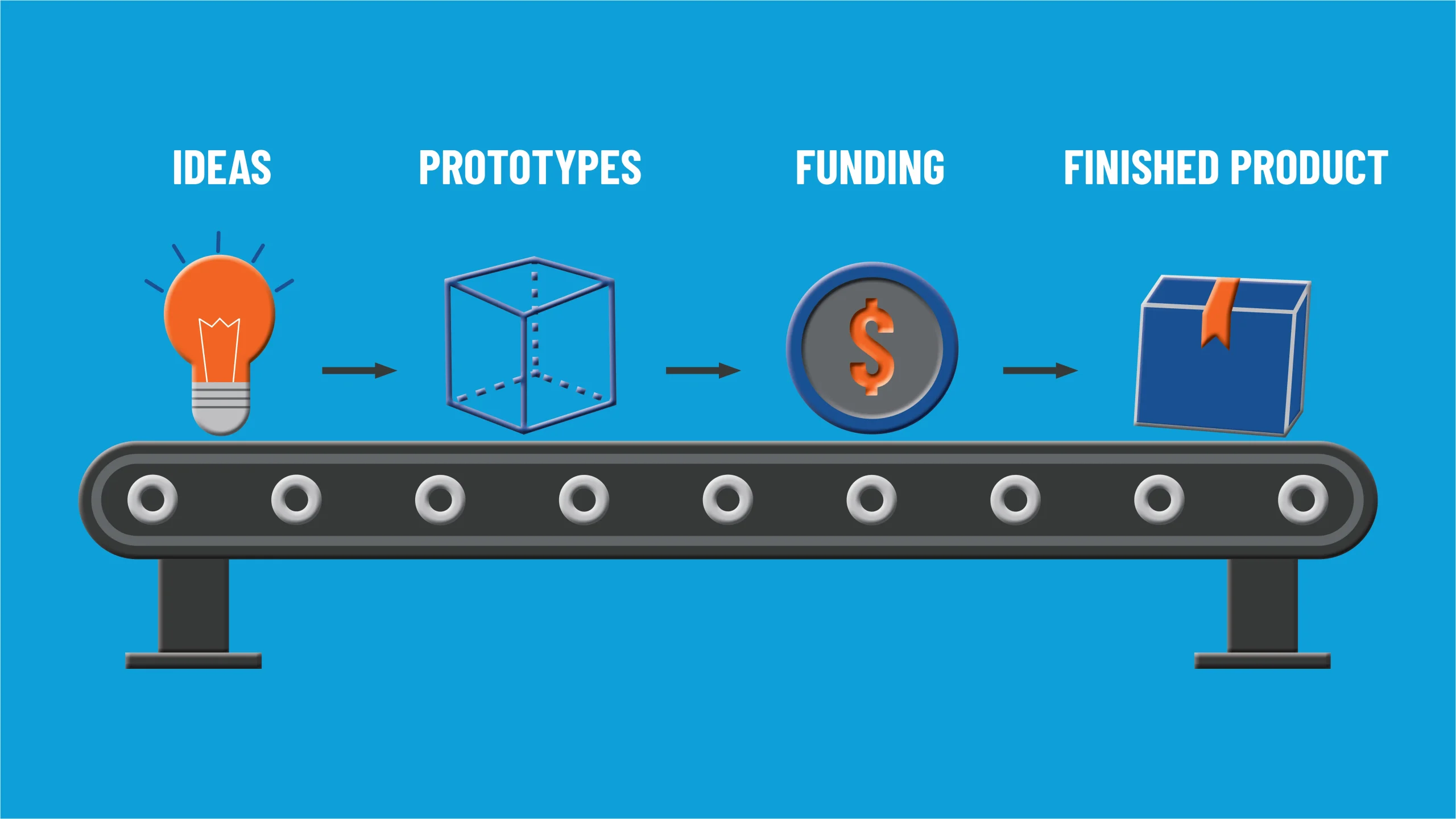
The process from idea to finished product
The key to successfully managing this pace is to set clear decision points, time boundaries, and a strategic definition of good enough to avoid endless iteration that consumes resources without moving the product forward.
Enterprises
Development timelines are usually shaped by formal review cycles, approvals, and validation steps intended to moderate risk. These structures add predictability, but they also make change more expensive once development is underway.
Take time early to understand which reviews are essential and which are procedural. Streamlining unnecessary handoffs can improve velocity without compromising quality.
Risk Tolerance and Prototyping
How teams approach risk and use prototyping shapes how they learn, validate ideas, and navigate uncertainty during development.
Startups
Prototyping is primarily used to learn. Early models test assumptions around usability, feasibility, and technical direction, so failure at this stage is expected.
For approaching prototyping successfully in a startup, be explicit about prototype intent.
Enterprises
Prototyping is more closely tied to verification and validation. Prototypes are expected to demonstrate compliance with defined requirements and readiness for downstream handoff.
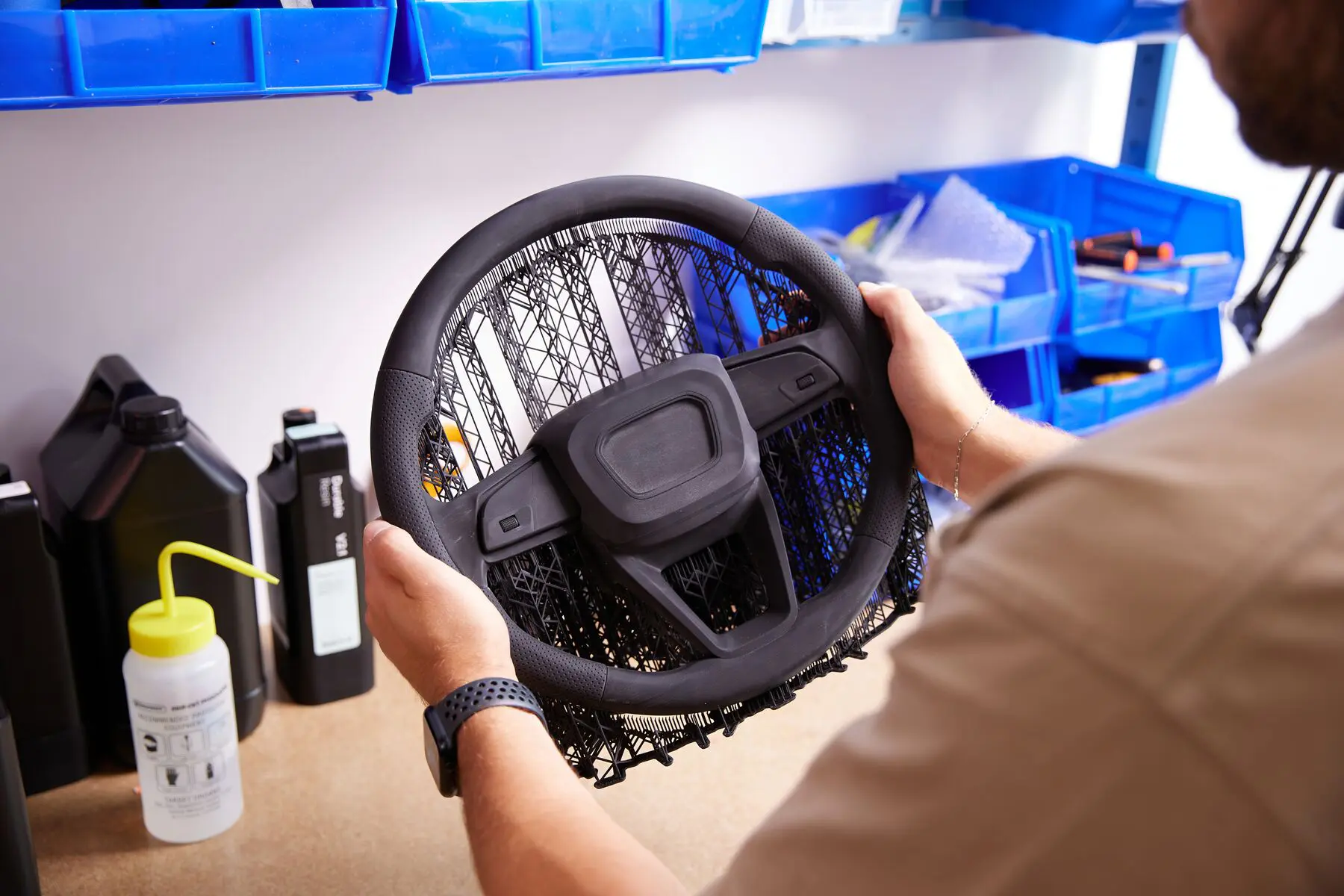
Using 3D printing for product prototyping
For the best outcomes, known regulatory, safety, or manufacturing constraints should be incorporated into the brief from the outset.
Decision-Making Structure
How teams define pace and manage timelines has a direct impact on prioritization, resource allocation, and overall momentum.
Startups
Decision-making is typically concentrated among founders or a small leadership group. This enables speed and flexibility, especially early on, but it also means decisions are often made quickly and informally as the product evolves.
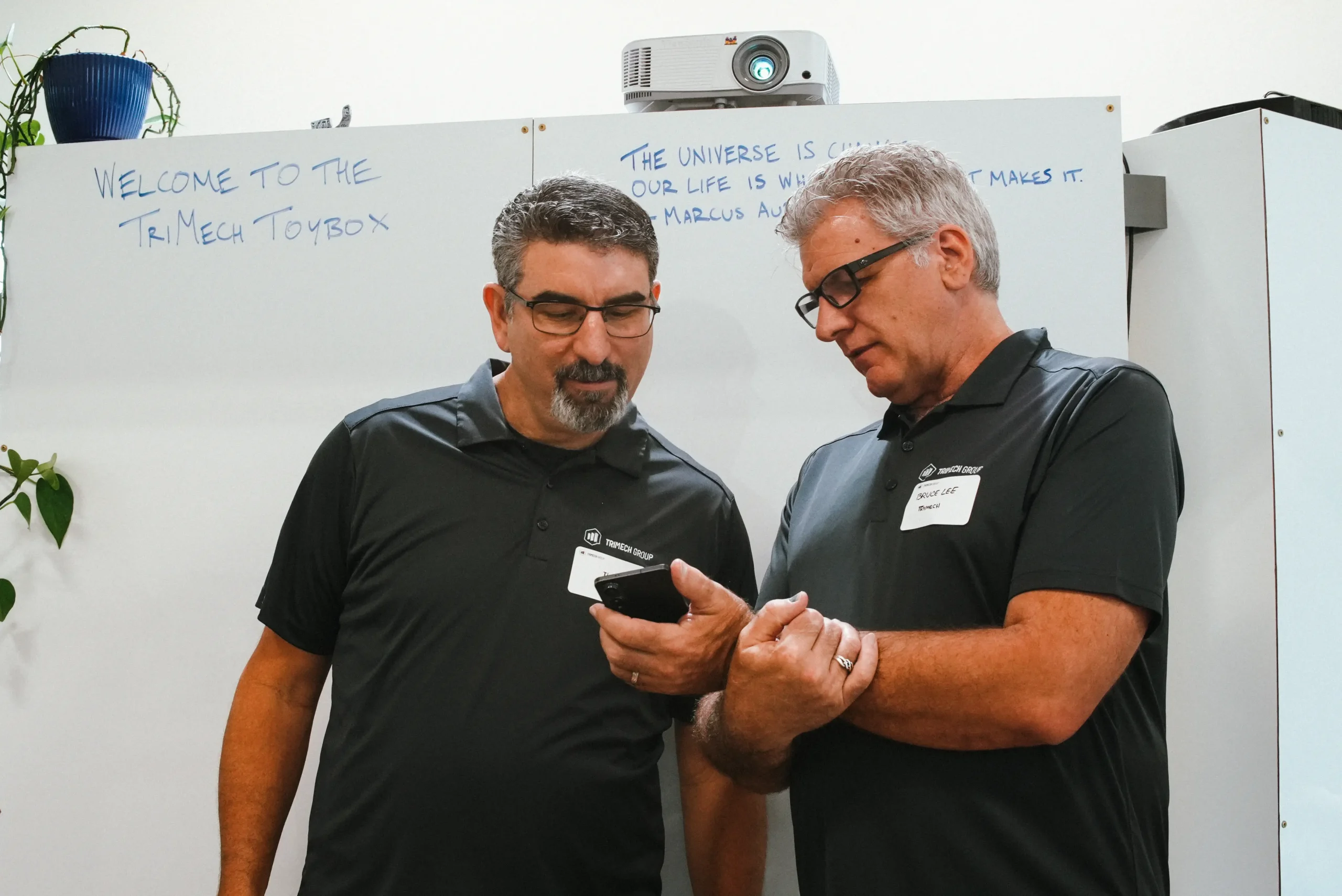
TriMech employees collaborating on a project
To maintain integrity as the team scales, focus on documenting key decisions and reasoning. This helps preserve design intent, priorities, and lessons learned over time.
Enterprises
Decisions are distributed across functions such as engineering, finance, and marketing. This structure supports alignment and risk management, but it also introduces dependencies that can slow progress if ownership is unclear.
To mitigate this, assign clear accountability early. Projects with a single, empowered owner tend to move forward more consistently, even within complex organizational structures.
What Enterprises Can Learn from Startups
While enterprises generally got where they are from solid decision-making and a history of success, they can still learn a thing or two from the agile startup.
- Startups tend to limit how long decisions stay open. Applying clearer decision windows can help enterprise teams avoid prolonged alignment loops on lower‑risk initiatives.
- Startups often prototype to learn, not just to validate. Using early mock prototypes to challenge assumptions or test features can reduce downstream risk.
- Startups with lean, cross‑functional teams with clear ownership tend to move faster. This structure can be effective for internal innovation or early‑stage product lines where uncertainty is still high.
What Startups Can Learn from Enterprises
Being agile and able to quickly make decisions is what enables rapid growth and meeting market demands. However, without proper checks and balances, startups can suffer from their own success.
- Enterprises document decisions, requirements, and design intent because teams change over time. For startups, this discipline becomes increasingly valuable as products mature and new contributors come on board.
- Enterprises account for manufacturing, compliance, and supply chain considerations earlier in the process. Startups that adopt this awareness selectively can avoid painful redesigns when transitioning from prototype to production.
- Enterprises regularly supplement with specialized expertise, rather than stretch internal teams beyond their depth. For startups, this can be a more efficient way to move forward without building permanent overhead too early.
The Best Product Development Principles for You
Product development challenges are rarely caused by a lack of effort or talent, but rather stem from applying a process that does not match the reality of the organization or the maturity of the product. In practice, many teams do not sit neatly at one end of the spectrum.
Scaling startups begin to feel enterprise‑level pressure around documentation, manufacturing, and compliance. Established companies working on new offerings often benefit from startup‑style speed, tighter decision cycles, and earlier experimentation.
Teams that recognize this shift and find product development principles to avoid the friction that comes from rigidly following a single playbook. The best approach adds structure where risk increases and keeps flexibility where uncertainty remains.
Have a Product Idea?
Discover our product development services tailored to startups, small manufacturers, and inventors.
Design Newsletter
Get the latest news curated for designers, makers and inventors.
Product Design Experts related to this content:
Discover our team of designers, engineers, project managers, and problem-solvers.

Lena Sitnikova, Senior Project Manager
Lena Sitnikova is a Senior Project Manager (CAPM®) with a background in industrial design and soft goods development.
More from our Blog

The Reinvention of Straws: From Plastic to Bamboo, Steel, and Glass
Innovating on a dated product with a new invention design is bold but, at times, necessary. Learn about the reinvention of straws!

Insight Into TriMech’s Design Strategy
The field of design is an extremely popular area of interest with hundreds of subcategories and niches. As a result of its breadth, creators and…

Thin Ice: From Prototype to Production
For decades, the weight-loss industry has been in continuous search of finding a healthy and effective way to establish long-term results. The community targeted often…
Need help with your Product Idea?
Tell us about your invention or product design idea and get the help you need design, build and bring it to market