








Understanding Industrial Design in Product Development
The satisfying click of a well-made pen cap and the way a power tool sits in your hand aren’t accidents or afterthoughts. These are a direct result of industrial design and quietly shape nearly every physical product in the modern world.
Industrial design remains one of the most misunderstood professions in product development. First-time product developers and entrepreneurs may even skip it entirely, not realizing what they’re leaving on the table.
For startups and established brands alike, it’s important to understand industrial design in product development and how it shapes your product’s journey for the better.
What Is Industrial Design?
Industrial design is the professional practice of designing products that are manufactured at scale. It sits at the intersection of how a product looks, how it feels to use, how it gets manufactured, and whether anyone actually wants to buy it. As a discipline, it incorporates art, engineering, technology, and human behavior to shape the final product design.

Early industrial design concepts before development
The term “industrial” often throws people off because it conjures images of factories and heavy machinery. The name reflects the discipline’s origins in the Industrial Revolution. This period created a need for people who could think about how products were made and how they were experienced.
What is Important in Industrial Design?
Industrial design is concerned with the form, fit, and feel of a product.
Industrial designers often find themselves asking:
- Who is using this product, and in what context?
- What does it need to communicate before someone even picks it up?
- Does it feel right in the hand?
- Can it be manufactured at a cost that makes commercial sense?
These questions sit upstream of engineering decisions and downstream of business strategy, making industrial design one of the most integrative disciplines in product development.
Common Misconceptions About Industrial Design
The best industrial designers live comfortably in the space between traditional graphic design and engineering. Industrial designers need to be creative enough to envision something new, technical enough to know what’s buildable, and empathetic enough to understand the person on the other end.
- Industrial design vs graphic design: While visual communication and brand identity may inform a project, industrial designers work in three dimensions, taking into consideration the physical form, materials, and tactile experience.
- Industrial design vs engineering: Engineers solve for how something works. Industrial designers solve for how something works for a person, and whether that person will want it in the first place.
The Step-by-Step Industrial Design Process
Industrial design doesn’t begin with sketching and end with a nice-looking rendering.
It’s an iterative process that moves from research to refinement, with each stage informing the next. Understanding how that process works helps anyone designing a product know what to expect and where the most important decisions get made.
Discovery
Every project starts with questions: Who is the end user? How will they interact with this product? What does the competitive landscape look like, and where does this product need to differentiate?
Discovery is the research phase and combines user research, market analysis, and a clearly defined project brief that aligns stakeholders before any creative work begins. The decisions made here set the foundation for everything that follows.
Ideation and Concept Development
With a clear brief in hand, designers move into ideation. This is the divergent phase of the process, where the quantity of ideas matters more than quality.
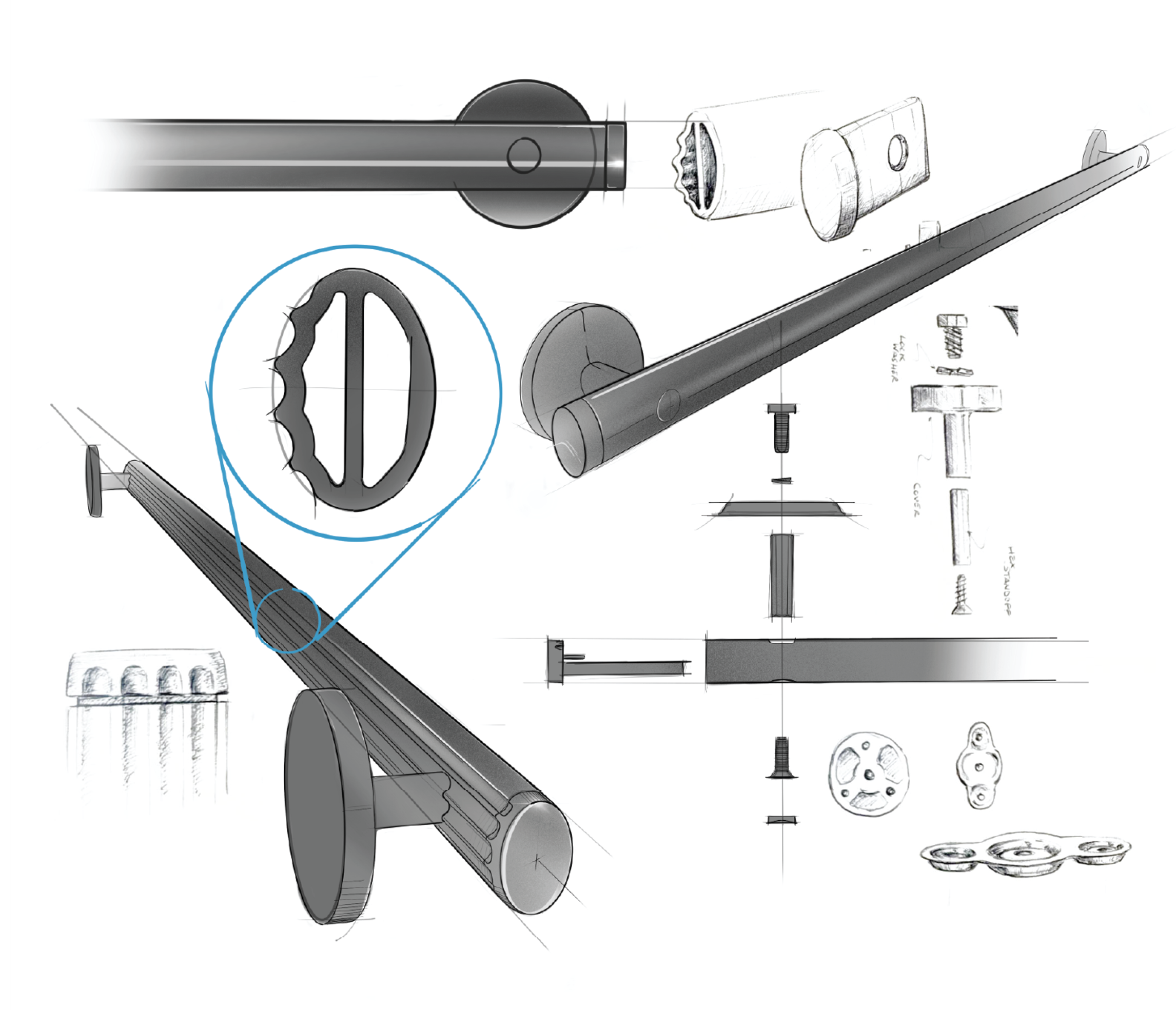
Using concept sketches to drive design choices
Sketching is the primary tool to quickly explore a wide range of directions, and the strongest ideas from ideation get developed into full concepts. This is where rough sketches become detailed proposals with defined form, material considerations, and a clearer sense of how each direction solves the product problem.
CAD Modeling
Once a concept direction is selected, designers build it out in CAD.
The modeling phase allows the team to evaluate proportions, resolve details, and surface potential issues before anything physical is made. It’s also the stage where industrial design and engineering work in close collaboration.
Physical Prototyping
Physical prototyping brings the design off the screen and into the hand, and is arguably one of the most important steps of the process.
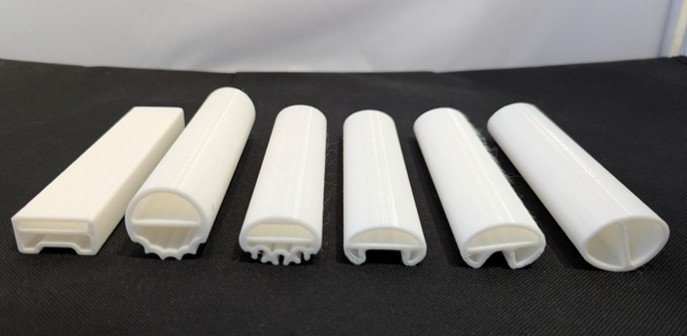
3D printed prototypes
Early prototypes are often 3D printed models used to evaluate form and ergonomics. Later-stage prototypes become increasingly functional, allowing for user testing and real-world validation before committing to production tooling.
DFM Review and Engineering Handoff
Before a design moves to production, it undergoes a design-for-manufacturing review.
This is where the industrial design is evaluated and refined with manufacturing constraints in mind. Design considerations under review are materials, tolerances, assembly processes, and unit cost to ensure they align with production.
Where Industrial Design Has the Most Influence in Product Development
Industrial design touches every stage of product development, but its influence is most consequential in four specific areas.
User Considerations and Ergonomics
A product can be technically flawless and still fail if people find it uncomfortable, confusing, or tiring to use. A poorly designed product can trickle down into poor customer reviews and high return rates. User considerations are baked into industrial design from the earliest stages and long before form is finalized or materials are selected.

Designing for accessibility
Both ergonomics and accessibility are part of this equation to ensure the design is valid for a broad range of users and the best product is created. Details like handle diameter, button placement, and grip angle are not arbitrary and can determine whether a product feels natural or frustrating in real-world use.
Aesthetics and Emotional Appeal
People make purchasing decisions with their eyes before their hands ever touch a product. Aesthetics are one of the most powerful signals a product sends about its quality, its intended audience, and the brand behind it.
CMF (Color, Material, Finish) is one of the primary tools industrial designers use to shape perception. The same form can communicate durability, luxury, approachability, or technical precision depending on the materials and finishes applied to it.
However, psychology plays a part to increase appeal of a new product. Research consistently shows that people attribute greater quality and reliability to products they find visually appealing, even before using them. Products that feel well-designed create satisfaction in everyday use.
Manufacturability
The most effective industrial designers develop products with manufacturing in mind from the start. The result is a product that looks the way it was intended to and can be built at a cost that supports a viable business.
Manufacturability may show up in many design decisions along the way, including:
- The radius of a curve affects how a mold is cut.
- Material choices influence tooling cost, cycle time, and assembly complexity.
- Finishing requirements, adding steps to the production process.
The cost of ignoring manufacturability also compounds quickly. Discovering and making changes during prototyping is ideal and manageable during DFM. However, changes made after tooling has begun are expensive, and changes discovered during production can derail a launch entirely.
Market Fit and Commercial Viability
A product that users enjoy and manufacturers can build efficiently still needs to earn its place in the market. Industrial design plays a direct role in whether a product is positioned to succeed commercially.

Color swatches used to finalize product colors
These inputs shape design decisions in concrete ways. A product in a crowded category needs a design language that sets it apart at a glance, where a retail product has different shelf-presence requirements than one sold direct-to-consumer.
Industrial design also helps validate commercial viability before significant capital is committed to tooling and production. Detailed CAD models, renderings, and prototypes allow teams to test market response and make informed pivots while changes are still relatively inexpensive.
Product Development Pitfalls That Industrial Design Helps You Avoid
By ignoring industrial design, your product is almost destined to fail from the start. Avoid these common development pitfalls to ensure a successful product launch.
- Bringing in industrial design too late: Industrial design has the most leverage early, when decisions are still fluid, and changes are inexpensive. The earlier it’s integrated, the more it can shape product architecture, manufacturing strategy, and user experience from the ground up.
- Prioritizing aesthetics over usability: Good industrial design balances form and function. A product can be visually compelling and genuinely frustrating to use at the same time.
- Designing without manufacturing constraints in mind: A design that can’t be built efficiently isn’t finished. Industrial design and engineering need shared visibility into constraints and trade-offs from the beginning.
- Treating industrial design as a one-time deliverable: Industrial design is an iterative process. Teams that treat it as a single phase often find themselves back at the design stage anyway after a prototype or DFM review reveals something that should have been caught earlier.
Are You Leveraging Industrial Design Effectively?
Industrial design is one of the most consequential disciplines in product development, but its impact is often underestimated. It determines whether a product is desirable before anyone buys it, usable after they do, manufacturable at a cost that supports the business, and positioned to compete in the market it’s entering.
For anyone building a physical product, the question isn’t whether industrial design matters. It’s whether it’s being applied at the right stage, with the right level of integration between design and engineering, and with enough focus on the end user to produce something people actually want.
Getting this right is harder than it looks and can be more valuable than most people realize.
Have a Product Idea?
Discover our product development services tailored to startups, small manufacturers, and inventors.
Design Newsletter
Get the latest news curated for designers, makers and inventors.
Product Design Experts related to this content:
Discover our team of designers, engineers, project managers, and problem-solvers.

Lena Sitnikova, Senior Project Manager
Lena Sitnikova is a Senior Project Manager (CAPM®) with a background in industrial design and soft goods development.
More from our Blog
Understanding Ventilation Strategies for a Safer Manufacturing Floor
Providing a safe and healthy manufacturing environment is crucial to the well-being of the employees operating on the manufacturing floor. Proper ventilation strategies is one...

Outdoor Invention with Low Emissions
Fan of camping? Here is an innovative new outdoor invention that will prepare you for all the camping trips you plan to take this summer!
How Home Inventors Stay Ahead: Structured Website Design
In this blog about website help for inventors, we talk about the importance of building a great website to set yourself up for success.
Need help with your Product Idea?
Tell us about your invention or product design idea and get the help you need design, build and bring it to market