








Trends for AI in Product Development | How AI is Transforming Product Development
Every day, new AI tools are being introduced that can do everything from generating polished product visuals to writing code to automate your spreadsheet deep dives. The biggest worry is that AI is going to replace the role of a designer in the product development process.
Fortunately, AI in product development is not replacing designers but is radically changing what designers spend their time on. People who build products and the companies that rely on them are worth exploring in this evolving industry.
How AI is Changing the Way Products are Developed
The most notable change AI has brought to product development is not through any single tool, but rather the pace and possibilities of the development process.
Concept Breadth
Coming up with a strong product concept requires time, thought, and creative investment – that part hasn’t changed (more on this later). What AI is affecting is what happens once a direction starts to take shape. The process of visualizing ideas to be able to communicate them with stakeholders used to take significant time and effort.
With the help of AI, tasks such as creating mood boards, concept renders, and visual variations that once took days to produce can now be turned around in a fraction of the time. This matters because it shifts where the creative energy goes.

Mood board for product design
Designers can spend more time thinking and less time producing, resulting in a more fluid conversation between concept and critique, and a process where stronger ideas can surface earlier. Beyond execution, AI can also serve as a useful creative counterweight by pushing back on assumptions and helping stress-test the logic behind a concept before resources are invested.
AI-Assisted Research
Industrial designers routinely have to become subject matter experts within a short timeframe. AI tools can help surface relevant considerations, identify vocabulary and regulatory factors, and synthesize large bodies of information into something actionable much quicker than traditional processes.
Closing the Gap Between Design and Manufacturing
Traditionally, manufacturability was something that got figured out toward the end of the development process and often through an involved back-and-forth between design teams and manufacturing partners. That wall is coming down, and AI-powered tools now allow designers to evaluate how a part will be made much earlier in the process.

The sketch to render transition with the help of AI
Issues like wall thickness, draft angles, and tooling constraints can be identified well in advance of submitting parts to the manufacturer. The result is fewer late-stage surprises, faster handoffs, and lower overall development costs.
What Will Product Development Look Like in 2026 and Beyond?
Every industry is experiencing significant change, and the teams that will be best positioned aren’t necessarily the ones with the most advanced tools, but those that understand how AI tools are changing the shape of the work itself.
Compressed Concept-To-Prototype Timelines
The combination of faster visualization, AI-assisted research, and earlier manufacturing feedback will compress how long it takes to move from an initial idea to something tangible.
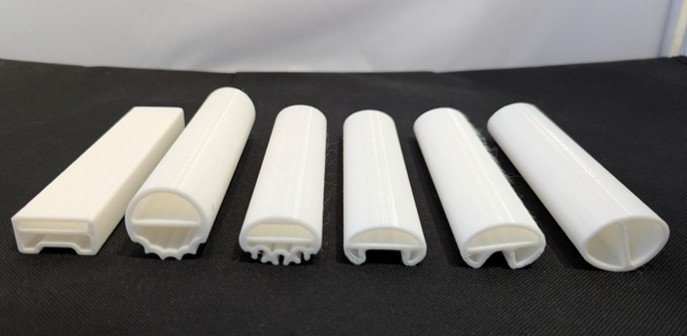
3D printed prototypes
For startups and small businesses, especially, this is meaningful as it reduces the cost of exploration and stretches early investment further through the development process.
Mastering Prompt Engineering
Ten years ago, the ability to sketch was a non-negotiable skill for any product designer. Today, knowing how to direct AI tools with precision to push toward an intentional output is becoming just as critical.
This isn’t purely a technical skill either, and requires a clear point of view and the judgment to recognize when an output is worth building on versus when it’s steering toward something generic.
The Originality Competitive Moat
As AI lowers the cost of entry for product development, the things that set products apart from the masses will focus more on deep research insights, a distinctive brand voice, and protected intellectual property. Furthermore, products that are intentionally crafted will gain deeper appreciation in the market.
Where AI Can’t Replace the Product Designer
While the tools are impressive and getting more capable by the month, some things remain stubbornly, meaningfully human. In the context of product development, these tend to be the things that determine whether a product actually succeeds in the real world.
Empathy and User Insight
AI can synthesize data, but it can’t observe unspoken behavior in context or surface the kind of frustration that leads to a genuine breakthrough.
Understanding what a user actually needs as opposed to what they say they need, or what the data suggests, still requires a human being paying close attention. It still takes a designer to validate what is the right product approach.
Cross-Functional Communication
A great design doesn’t sell itself. Getting customers, investors, and manufacturing partners to rally around a product direction requires active human mediation.

TriMech Design Solutions collaborating on a project
This may include listening to feedback, resolving concerns on the fly, and crafting a narrative that resonates with different audiences in different ways. AI can help prepare for those conversations, but it can’t have them.
Ethical and Brand Responsibility
Designers are accountable for outcomes in the real world.
AI has no brand loyalty, no ethical stake in how a product lands, and no consequence to bear if something goes wrong. The judgment calls that shape a product’s identity and what it stands for, who it’s for, and what it should never compromise on belong to the people behind it.
Leveraging AI in Product Development
AI hasn’t made product development easier, but it has shifted where the difficulty lives. The labor of generating options has gotten cheaper and faster, while the discipline of choosing the right one, for the right reasons, remains as demanding as ever.
The traditional product development process is:
- Limited by budget and hours
- Weakened by hidden manufacturing risks
- Focused on technical execution
The AI-augmented product development process is:
- Vast and inexpensive
- Strengthened by surfacing problems early
- Focused on curation, judgement, and asking the right questions.
The teams that will get the most out of AI in product development are the ones that recognize that AI amplifies whatever expertise is directing it. Generic inputs produce generic outputs. The new premium in product development isn’t execution. It’s curation, inquiry, and judgment to know the difference between a good idea and the right one.
Click here to connect with one of our human designers to help bring your idea to reality.
Have a Product Idea?
Discover our product development services tailored to startups, small manufacturers, and inventors.
Design Newsletter
Get the latest news curated for designers, makers and inventors.
Product Design Experts related to this content:
Discover our team of designers, engineers, project managers, and problem-solvers.

Lena Sitnikova, Senior Project Manager
Lena Sitnikova is a Senior Project Manager (CAPM®) with a background in industrial design and soft goods development.

Magnus Skold, Senior Industrial Designer
Per Magnus Skold is an industrial designer with over 20 years of experience creating user-centered, production-ready products across consumer electronics, medical devices, aerospace, lifestyle products, and transportation.
More from our Blog

What the History of Video Game Development Can Teach Us About Innovation
Did you know that the history video game development can teach us a lot about product innovation and design! Read our informative blog to learn...

Prototyping Model in Engineering Design
Explore how prototyping models drive innovation in design engineering. Learn key types, why they are used, and answers to frequently asked questions.
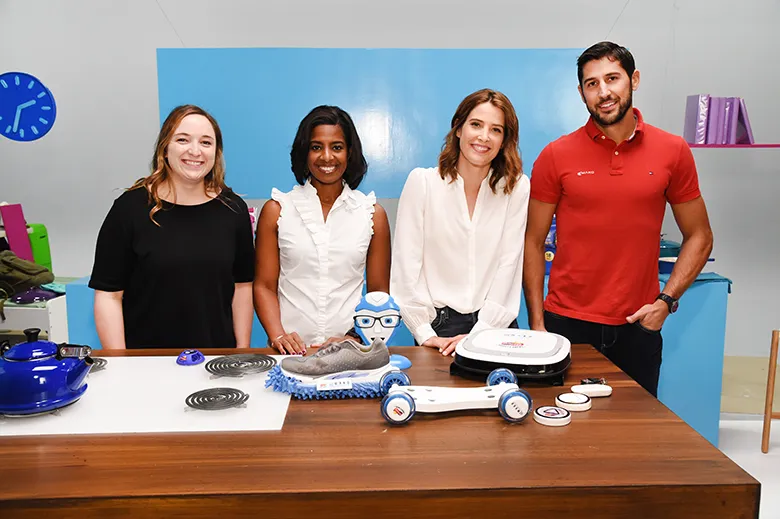
Throwback – Cobie Smulders Big Shout Out to Mako Design and Invent
After Dreamvention, Actress Cobie Smulders gave TriMech a huge shout out for our amazing invention service!
Need help with your Product Idea?
Tell us about your invention or product design idea and get the help you need design, build and bring it to market